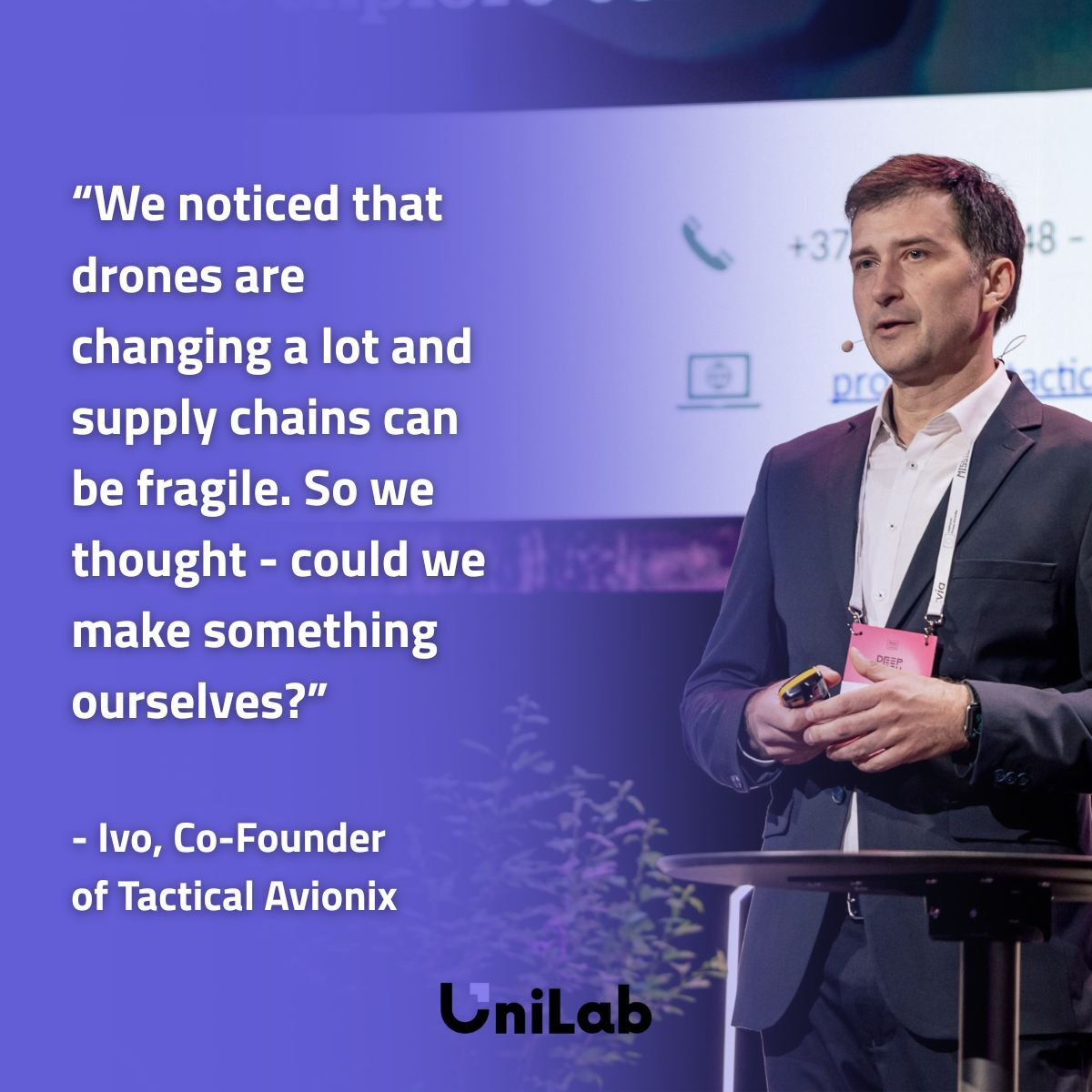
Ivo Ķutts currently works at the University of Latvia’s Institute of Mathematics and Computer Science, focusing on IT and information security - including maintaining the “.lv” domain. But his roots go deep into the startup world, with over 20 years of experience. These days he has picked up the building spirit, sharing more about his experience with Tactical Avionix.
Early Startup Days
In the early 2000s, Ivo co-founded several ventures. One was a Skype-like platform for video calls on old Nokia phones - an achievement that surprised even Nokia engineers when they saw it running over the internet.
Another was an early live-streaming service, where someone could film what’s happening on the street and broadcast directly to a website. “YouTube and MySpace weren’t even a thing yet,” he recalls. “To be honest, maybe we hadn’t even figured out why it was needed at that time.” The tech worked, but infrastructure and market weren’t there yet.
Another was an early live-streaming service, where someone could film what’s happening on the street and broadcast directly to a website. “YouTube and MySpace weren’t even a thing yet,” he recalls. “To be honest, maybe we hadn’t even figured out why it was needed at that time.” The tech worked, but infrastructure and market weren’t there yet.
“We were too early. By the time YouTube arrived, we were burnt out and hadn’t found our niche.”
When the 2008 crisis hit, Ivo moved into the stability of academia, spending the next 15 years strengthening Latvia’s cybersecurity.

Ivo speaking at the Cyberchess 2019 conference (Photo retrieved from CERT.lv)
The Birth of Tactical Avionix
Russia’s invasion of Ukraine reignited his entrepreneurial drive.
“We noticed that drones are changing a lot in this war and supply chains can be fragile. Which is why Latvia must build its own technological capacity instead of relying on imports. So we thought - could we make something ourselves?”
A group of friends began building AI-powered drones on evenings and weekends. After a 3 year marathon, only two founders remained, and Tactical Avionix was born. A win of the audience choice award at the LMT Hackathon led to entry into the UniLab accelerator in autumn 2024 - an experience Ivo describes as “shock therapy”.
“I remember around 2005, back when Y-Combinator times started, we were pitching in a similar way in California. We had large conferences and our booths were flooded by people. However, the pitches back then were still very product-based - 'this is our product and this is our team'. UniLab taught us to start with the problem, then the solution, then the impact.”
Joining UniLab
Before UniLab, Tactical Avionix was more of a hobby. They hadn’t spoken to clients or tested market needs yet. “UniLab gave us that push. Go inside and conquer - that's what they gave us,” shares Ivo.
“The program was very hands-on, training quite intensively, with homework and pressure on us. We immediately tested all the courses they provided us with in real life.”
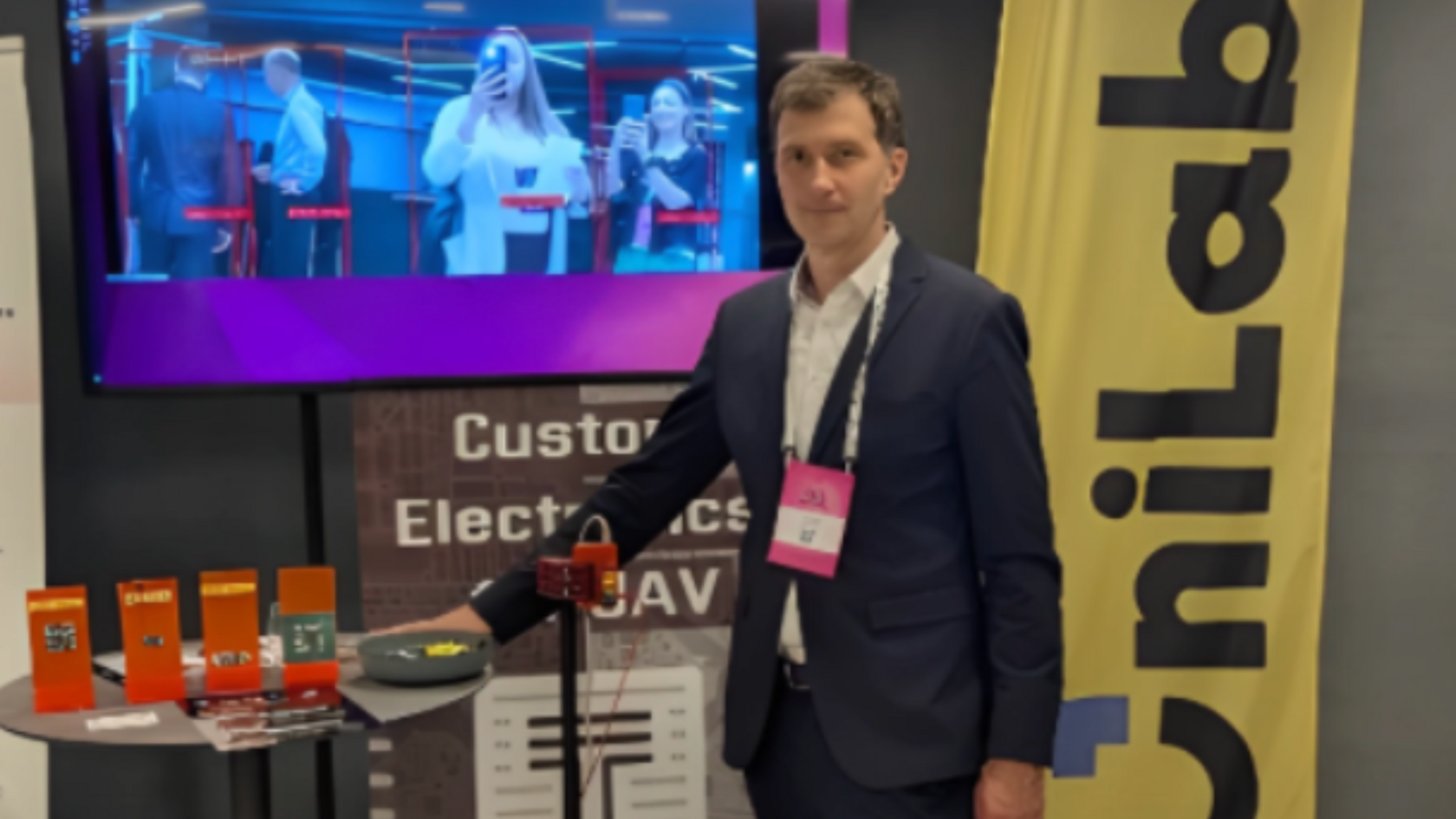
Tactical Avionix at UniLab's stand in Deep Tech Atelier 2025
From Components to AI
Tactical Avionix began by producing secure drone components - designed in Latvia, made in Europe - for dual-use applications. While the parts were high quality and free of backdoors, UniLab’s verdict was clear: “not impressed”. The feedback pushed the team to pivot.
They landed on AI-powered computer vision. The team developed an electronic board with a digital camera that can be built into air, ground, or sea drones. Once programmed, it can carry out specific tasks, like scanning for particular objects or navigating without GPS. The latter is crucial in conflict zones, where satellite signals are often jammed. Instead, the drone matches what it “sees” to pre-loaded map data to find its way.
The same system could be used beyond defense, for example, to detect defects on production lines. Users will be able to load their own AI models, though military-grade ones will have built-in protections to prevent tampering.
They landed on AI-powered computer vision. The team developed an electronic board with a digital camera that can be built into air, ground, or sea drones. Once programmed, it can carry out specific tasks, like scanning for particular objects or navigating without GPS. The latter is crucial in conflict zones, where satellite signals are often jammed. Instead, the drone matches what it “sees” to pre-loaded map data to find its way.
The same system could be used beyond defense, for example, to detect defects on production lines. Users will be able to load their own AI models, though military-grade ones will have built-in protections to prevent tampering.
“In short, we’re working on computer vision and drone autonomy for both military and civilian use,” Ivo says.
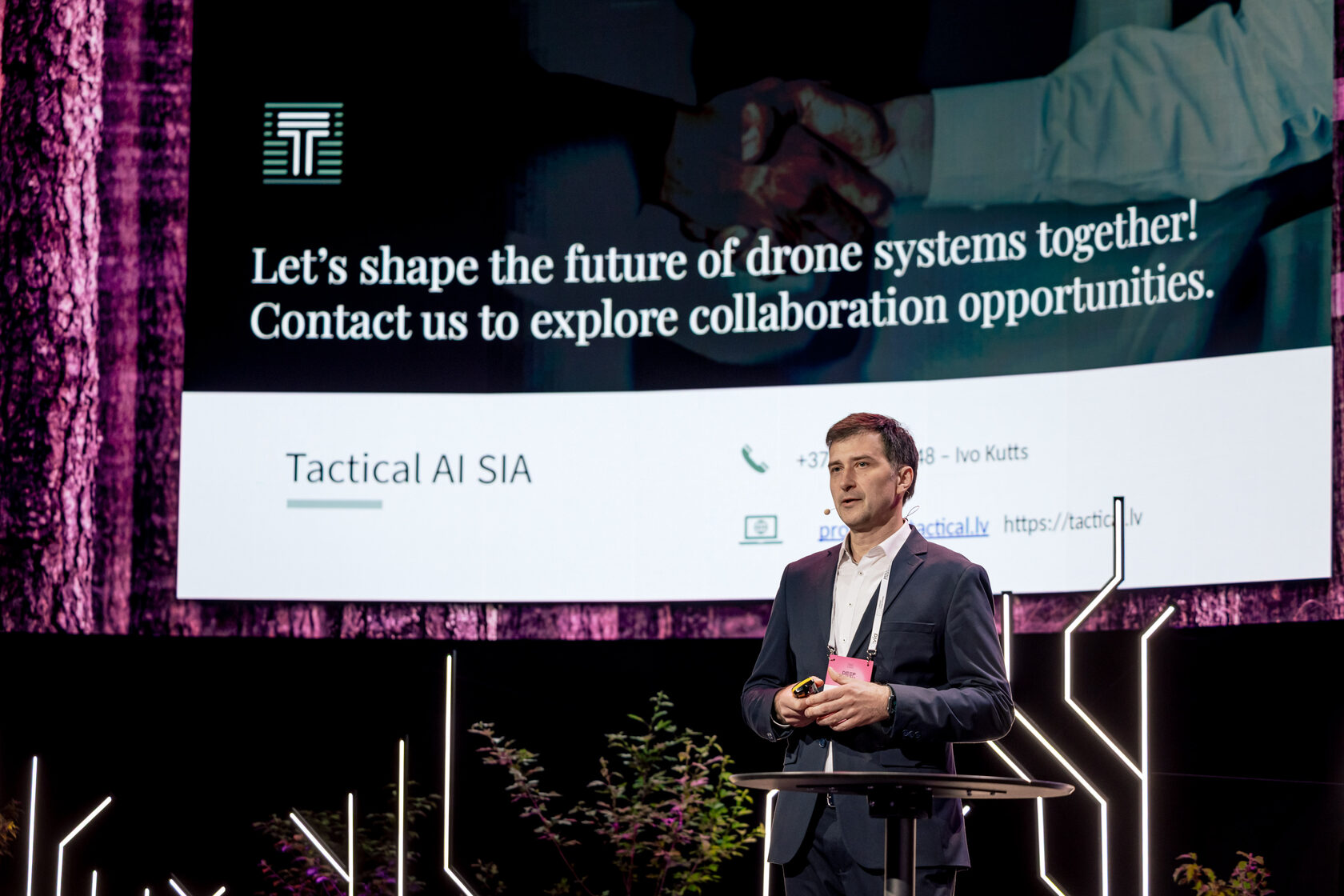
Ivo speaking at Deep Tech Atelier 2025 (Photo: Lauris Vīksne)
Challenges, Choices, and Reflections
Ivo doesn’t dwell much on challenges, but he admits there are lessons he’s still working on. “One thing I am still learning is that there’s no point in regretting something that’s already done. It’s important to learn from the past to improve the future, but it shouldn’t be overanalyzed - just move forward.”
There’s also the reality of turning effort into results.
There’s also the reality of turning effort into results.
“As the saying goes, ‘If you don’t earn money, then you gain experience’. And I feel like I already have quite a surplus of experience. Maybe it’s time to stop just accumulating experience and really build something for myself and others.”
For Ivo, that means creating something meaningful that he’s passionate about. “If we develop this AI module according to our plans, then I will definitely feel a great sense of satisfaction - and that’s what I strive for.”
Another personal hurdle is saying no. “Many things excite me, and it’s difficult to refuse them. I try to split into ten parts, but at some point I realize I’m maybe not so young anymore - I can’t stay up at night and still manage family duties. So I am learning to evaluate where and when I truly jump in and how to keep up the efficiency.”
One of the boldest moves in his career was going all-in on a startup years ago, leaving the stability of a regular paycheck. While that venture didn’t reach Skype-level success, the global experiences and connections still shape his journey.
One of the boldest moves in his career was going all-in on a startup years ago, leaving the stability of a regular paycheck. While that venture didn’t reach Skype-level success, the global experiences and connections still shape his journey.
“We traveled around the world quite a bit, we worked in Japan and the US. It was truly a time of widening our horizons and we met many people, who we are still in touch with.”
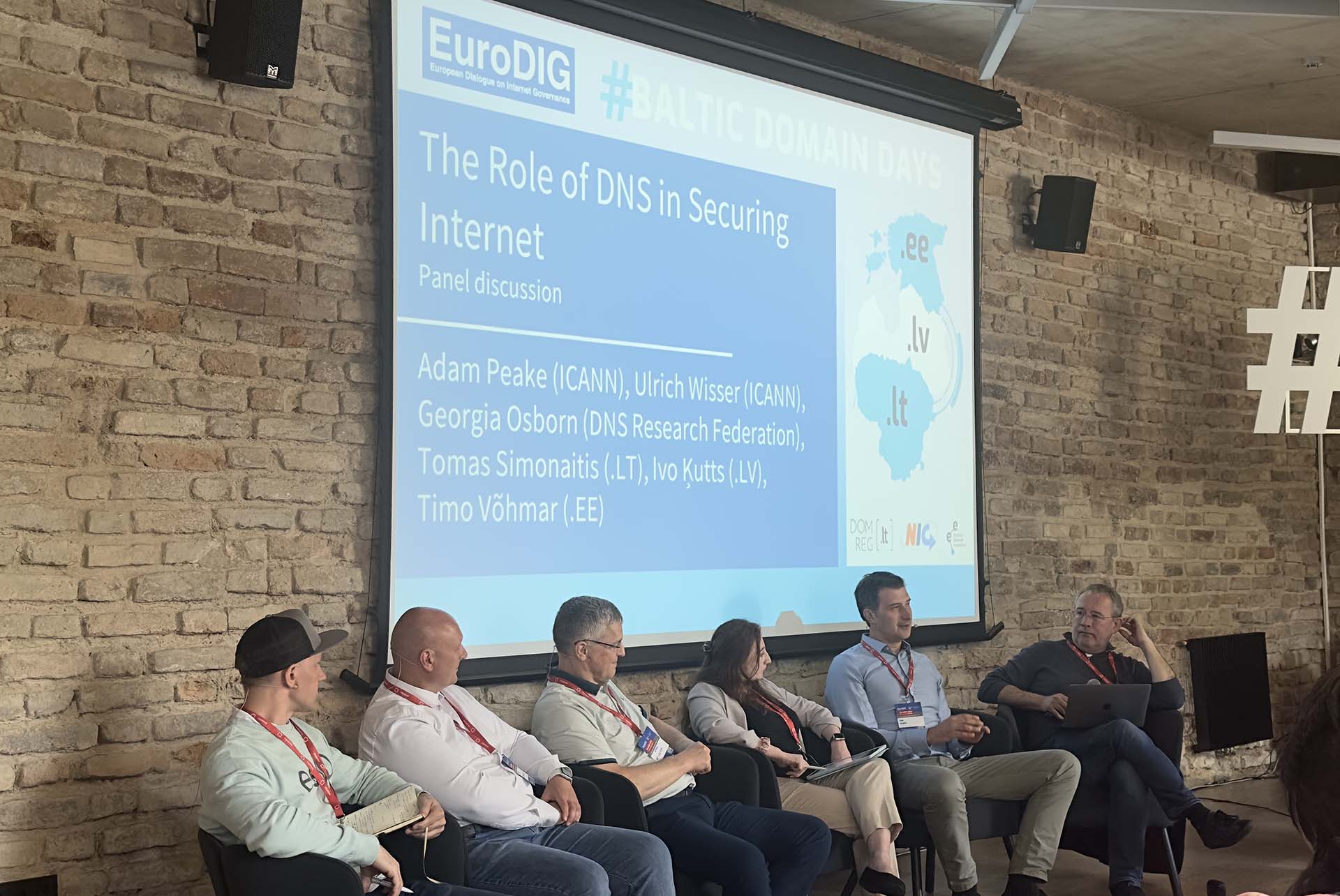
Ivo speaking at the Baltic Domain Days 2024 conference (Photo retrieved from NIC.lv)
A Piece of Himself in Tactical Avionix
For Ivo, Tactical Avionix isn’t just a business - it’s deeply personal. His passion for building companies started early.
“After high school, I already knew I wanted to specialize in managing a company. Not just to lead one, but to develop my own thing.”
What makes Tactical Avionix unique for him is the tangible nature of the work. Coming from an academic background in software and IT, Ivo was used to creating things that existed only in a virtual space.
“Quite often in this environment, you never actually hold the programs in your hands - they exist somewhere in the computer,” he explains. “Here, we’ve embedded our software in hardware. We can hold our product in our own hands, and it can fly.”
The memory of their first successful test flight is still vivid. “We put together the first components, released it, and it actually flew. We even landed successfully, which is incredible. Flying FPV drones typically takes at least 100 hours of simulator practice to avoid crashing.”
Advice to His Younger Self
“Don’t get stuck on the ‘what ifs’ of the past. Focus on the ‘what ifs’ that could happen in the future. Reflect, analyze, move on and improve,” shares Ivo.